Lomefloxacin exhibits broad-spectrum antibacterial activity against both gram-negative and gram-positive bacteria, including Escherichia coli, Klebsiella pneumoniae, Staphylococcus aureus, and Pseudomonas aeruginosa, with MIC values ranging from 0.02 to 0.1 µg/mL for some strains. It demonstrates especially strong efficacy against gram-negative organisms such as Escherichia coli and Klebsiella pneumoniae, with MIC values as low as 0.1 µg/mL. The compound also inhibits Escherichia coli DNA-gyrase and shows significant antibacterial activity against multidrug-resistant strains. Additionally, Lomefloxacin displays antimicrobial properties against various strains of Mycobacterium, including Mycobacterium tuberculosis and Mycobacterium smegmatis, with MIC values up to 10.0 µg/mL.
In vitro assays have revealed moderate permeability characteristics; the compound exhibited a permeability value of 1.1 x 10^-6 cm/s in the PAMPA-BBB assay, suggesting potential ability to cross the blood-brain barrier. Pharmacokinetic studies noted high oral bioavailability of approximately 98.0% and a high volume of distribution (Vdss = 2.3 L.kg^-1).
Lomefloxacin also demonstrated antitrypanosomal activity against Trypanosoma brucei brucei, with an IC50 value of 197,000.0 nM. Moreover, it showed inhibition of human enzymes such as Histone Lysine Methyltransferase G9a, Thioredoxin Reductase 1 (TrxR1), and Flap endonuclease 1 (FEN1) at sub-micromolar concentrations.
However, compound 16278 exhibited phototoxic effects in UV-irradiated Swiss albino mice, with ear thickness measurements increasing after a dose of 140 mg/kg, peaking at 72 hours post-irradiation. It also demonstrated liver enzyme alterations indicative of moderate hepatotoxicity in clinical-chemistry studies. Furthermore, the compound displayed antiviral activity against SARS-CoV-2, though with moderate efficacy as indicated by its IC50 value.
Overall, Lomefloxacin holds promise as a potential antimicrobial and antiparasitic agent, with noteworthy permeability and bioavailability attributes, but its phototoxic and hepatotoxic effects warrant careful consideration in further development..
Note: Summary generated by AI. Data source: ChEMBL 




 您的购物车当前为空
 很棒
很棒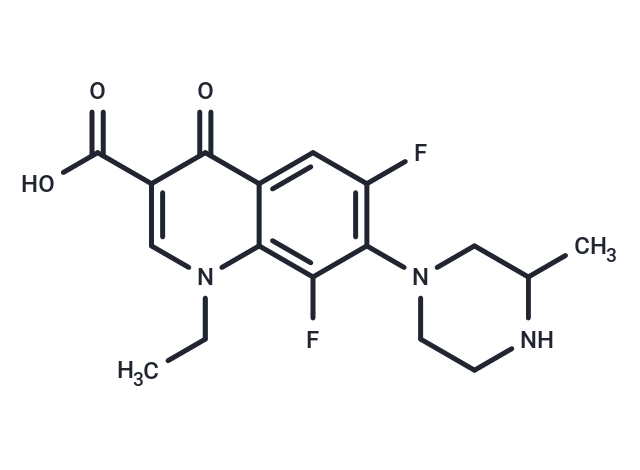


 嗨!有任何问题?点我咨询

 | 沪(静)应急管危经许[2024]203441