Clopidogrel is a multifaceted bioactive substance demonstrating significant inhibitory, modulatory, and cytotoxic properties across various biological targets. It acts as a potent inhibitor of human recombinant carboxylesterase 1 (CES1) with a Km value of 55700 nM and a pKm value of 4.25. In the field of enzymatic inhibition, it also shows mechanism-based inhibition of cytochrome P450 2B6, with Ki values of 500 nM and 1100 nM and Kinact values of 0.35 min^-1 and 0.15 min^-1, respectively. It has considerable activity against the serotonin transporter (SERT), with an IC50 of 562 nM and a Ki of 299 nM.
The compound exhibits noteworthy bioactivity in various assays:
- It inhibits the Influenza NS1 protein function with a potency of 19952.6 nM.
- It demonstrates delayed death inhibition of the malarial parasite plastid with potencies of 8275.3 nM (96-hour incubation) and 11689.1 nM (48-hour incubation).
- It functions as an inhibitor of HP1-beta chromodomain interactions with methylated histone tails with a potency of 89125.1 nM.
Furthermore, Clopidogrel exhibits pharmacokinetic properties in Sprague-Dawley rats, with a maximum concentration (Cmax) of 21.53 nM reached at 0.583 hours post-administration, a half-life of 2.48 hours, and an area under the curve (AUC) of 32200 ng.hr.mL^-1. It shows a high clearance rate in human liver microsomes exceeding 300 mL.min^-1.g^-1, indicating rapid metabolism.
In antiplatelet and antithrombotic assays, the compound effectively inhibits ADP-induced platelet aggregation in rabbit platelets and demonstrates significant antithrombotic activity in rodent models, reducing thrombus weight by 67% in the FeCl2-induced thrombosis model. Additionally, it prolongs bleeding time in various animal models, indicative of its anticoagulant potential.
On the toxicity front, Clopidogrel has shown moderate hepatotoxicity, as evidenced by elevated serum ALT and AST enzyme levels, and significant impacts on hepatotoxicity indices. It also shows intravital toxicity by prolonging mesenteric and cuticle bleeding time in rat models.
The compound exhibits broad-spectrum antibacterial activity, particularly against methicillin-resistant Staphylococcus aureus (MRSA) USA300, and antifungal activity against Candida albicans and Cryptococcus neoformans. However, its antiviral activity against SARS-CoV-2 is limited, with low inhibition efficacy.
Overall, Clopidogrel’s diverse bioactivities suggest its potential as a valuable candidate in pharmaceutical research while underscoring the necessity for careful evaluation of its pharmacodynamics and toxicological profiles in further studies..
Note: Summary generated by AI. Data source: ChEMBL 




 您的购物车当前为空
 很棒
很棒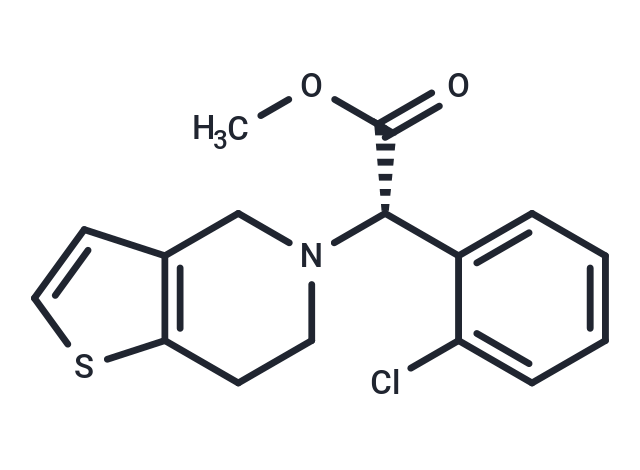


 嗨!有任何问题?点我咨询

 | 沪(静)应急管危经许[2024]203441