RPW-24 exhibits multiple bioactivities with significant potential for anti-malarial, anti-leishmanial, anti-trypanosomal, and anti-mycobacterial applications. It inhibits the proliferation of Plasmodium falciparum (3D7 strain) with an EC50 of 527.0 nM and drug-resistant W2 strain with an EC50 of 755.0 nM, demonstrating its effectiveness against both drug-susceptible and drug-resistant malaria strains. The compound also shows low cytotoxicity against Huh7 hepatocellular carcinoma cells with a CC50 of 8920.0 nM. Additionally, RPW-24 is active against Leishmania infantum with an IC50 of 4000.0 nM, Trypanosoma cruzi with an IC50 of 3809.44 nM, and Trypanosoma brucei strains with IC50 values ranging from 3346.97 nM to 6531.06 nM.
Though it shows low activity against non-replicating Mycobacterium tuberculosis (Mtb) with an MIC90 > 100,000.0 nM, it exhibits moderate activity against replicating Mtb with an MIC90 of 24700.0 nM. The compound has a lower LD50 of 10.9 µM against HepG2 cells, indicating moderate toxicity, and effectively inhibits parasites like Cryptosporidium parvum with a 40.42% inhibition rate and Schistosoma mansoni somules at a concentration of 2.5 µM.
RPW-24 displays substantial anti-HIV bioactivity against CCR5-tropic and CXCR4-tropic strains and cytotoxicity against U87-CD4-CXCR4 and U87-CD4-CCR5 cells. It also shows promising effects in inhibiting the proliferation of various cancer cell lines, including ovarian, renal, breast, colon, melanoma, leukemia, non-small cell lung cancer, prostate, and CNS cancers, with inhibition percentages ranging from 23% to over 100%.
Further bioactivities include a significant inhibition of the hERG Kv11.1 channel with 85.0% inhibition at 11.1 µM, anti-babesial activity with IC50 values between 6310.0 nM and 16520.0 nM, inhibition of typical and atypical growth of S. cerevisiae strain JHY222, and moderate inhibition of Plasmodium falciparum gametocyte and ookinete development. While the compound exhibits limited protein kinase inhibition, it does exhibit an IC50 of 1105.0 nM against P. falciparum Dd2-luc strain and shows low potency against glucose transporter-deficient transgenic Leishmania Mexicana promastigotes. These diverse activities display the compound's potential as a broad-spectrum antiparasitic and therapeutic agent across various infectious and non-infectious disease models..
Note: Summary generated by AI. Data source: ChEMBL 




 您的购物车当前为空
 很棒
很棒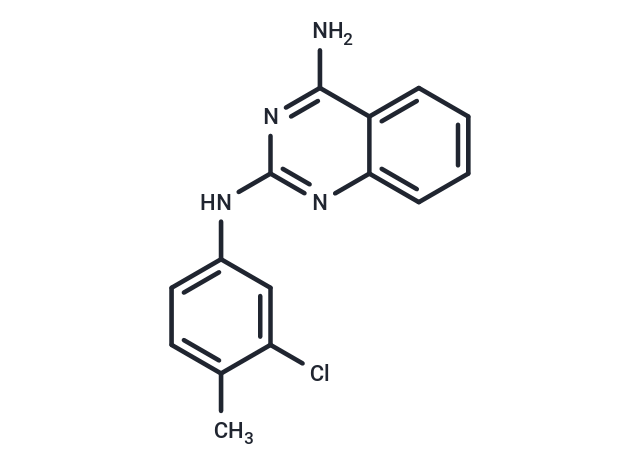


 嗨!有任何问题?点我咨询

 | 沪(静)应急管危经许[2024]203441