Lobeline hydrochloride exhibits a broad spectrum of bioactivities against various biological targets. It shows antiplasmodial activity against multiple strains of Plasmodium falciparum, with IC50 values ranging from 3981.07 nM to 15848.93 nM after 72 hours, as measured by the SYBR green assay. The compound is active in several assays, acting as an inhibitor of mitochondrial division, activator of mitochondrial fusion, and inhibitor of Schistosoma Mansoni Peroxiredoxins. It also demonstrates efficacy against Hepatitis C Virus (HCV) and Marburg Virus, and exhibits delayed death inhibition of the malarial parasite plastid.
In addition, Lobeline hydrochloride inhibits a wide range of enzymatic and protein interactions, including endonuclease IV, MPP8 Chromodomain, Histone Lysine Methyltransferase G9a, HP1-beta Chromodomain, Polymerase Iota, Human hERG Channel activity, and USP1/UAF1, with potencies ranging from 22.4 nM to 89125.1 nM.
The compound shows inhibition of electric eel AChE at 2 mg/ml with a rate of -0.17% and of horse BChE at 2 mg/ml with a 30.37% rate. Additionally, Lobeline hydrochloride significantly inhibits sodium fluorescein uptake in OATP1B3- and OATP1B1-transfected CHO cells at a concentration of 10 µM, with inhibition percentages of 108.46% and 125.57%, respectively.
Its antiviral activity is noted against SARS-CoV-2, reducing virus-induced cytotoxicity in Caco-2 and VERO-6 cells at a concentration of 10 µM with varying inhibition rates. Specifically, it showed 24.02% inhibition in Caco-2 cells after 48 hours and -0.02% in VERO-6 cells. Additionally, it inhibits SARS-CoV-2 3CL-Pro protease with an inhibition percentage of 0.3163% at 20 µM.
Lobeline hydrochloride also demonstrates moderate antifungal activity against Candida albicans and various antibacterial activities with notable inhibition rates against Klebsiella pneumoniae, Pseudomonas aeruginosa, Acinetobacter baumannii, and Staphylococcus aureus MRSA. Its impact on cell viability varies across different cell lines, showing both cytotoxic and stimulatory properties in HEK293T, U2OS, and human fibroblast cells.
Overall, Lobeline hydrochloride proves to be a versatile compound with diverse biological activities ranging from antiplasmodial and antiviral efficacy to inhibition of various enzymatic processes and cellular growth effects..
Note: Summary generated by AI. Data source: ChEMBL 




 您的购物车当前为空
 很棒
很棒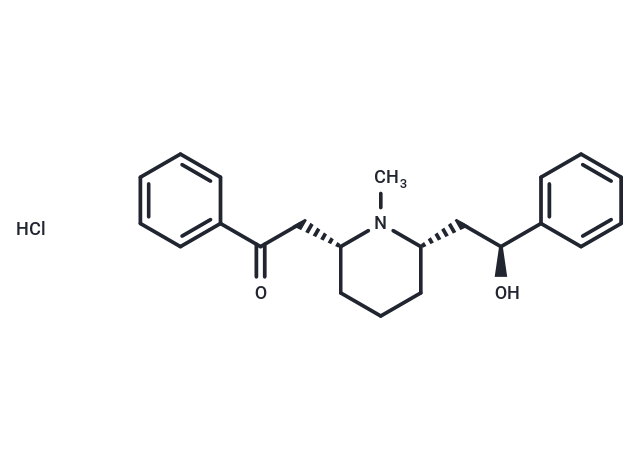


 嗨!有任何问题?点我咨询

 | 沪(静)应急管危经许[2024]203441