Cinoxacin exhibits multifaceted bioactivities across various biological targets and organism models. It demonstrates inhibitory activity at low concentrations against enzymes such as beta-lactamase, chymotrypsin, and malate dehydrogenase (MDH), with all inhibition levels below 5.0%. The compound also inhibits DNA gyrase-induced DNA cleavage with a MIC of 43.0 µg/mL and shows antibacterial activities against several strains of Escherichia coli, Klebsiella pneumonia, and Pseudomonas aeruginosa with MIC values ranging from 1.6 µg/mL to >100.0 µg/mL. Additionally, it inhibits human FAAH at 1 µM with an inhibition rate of 3.36%.
In antiplasmodial assays, Cinoxacin shows moderate potency against Plasmodium falciparum strains 3D7, HB3, and W2. It also exhibits inhibition of Plasmodium falciparum lines Dd2, GB4, 7G8, showing IC50 values ranging from 5633.4 nM to 10000.0 nM. Other notable activities include modulation of Lamin A splicing (5.0 nM), inhibition of Human Jumonji Domain Containing 2E (JMJD2E), and action against malaria parasite plastids and several enzymes such as Bloom's syndrome helicase (BLM) and ALDH1A1.
Cinoxacin affects liver enzyme functions, increasing levels of alkaline phosphatase, SGOT, SGPT, LDH, and GGT, indicating potential impacts on liver function. However, it shows no significant bioactivity associated with drug-induced liver injury (DILI), receiving a score of 0.0 in related assays. The compound's pKa of 4.7 suggests significant ionization under physiological pH conditions, affecting its bioavailability and interactions.
In transporter assays, Cinoxacin strongly inhibits the uptake of sodium fluorescein in OATP1B1- and OATP1B3-transfected CHO cells. While it has shown moderate liver toxicity in clinical trials, it exhibits high intrinsic clearance in human liver microsomes, with a clearance rate of less than 3.0 mL/min/g.
Against SARS-CoV-2, Cinoxacin demonstrated inhibition of viral-induced cytotoxicity in VERO-6 cells and moderate inhibition of the viral 3CL-Pro protease. However, its overall antiviral potency against SARS-CoV-2 was relatively weak with an IC50 value exceeding 20000.0 nM in specific assays.
Lastly, the compound shows varied bioactivities against human HDAC6 and exhibits potential as an antimalarial agent, inhibiting both hepatic and blood stages of malaria parasites, including Plasmodium yoelii yoelii 265 BY and chloroquine-sensitive P. falciparum, with IC50 values ranging from 28.5 µg/mL to 118.2 µg/mL. In summary, Cinoxacin displays a diverse array of biochemical activities, potential therapeutic implications, and moderate levels of toxicity in various biological contexts..
Note: Summary generated by AI. Data source: ChEMBL 




 您的购物车当前为空
 很棒
很棒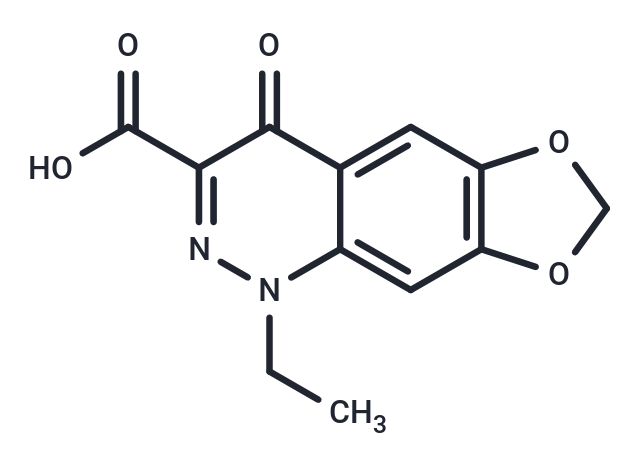


 嗨!有任何问题?点我咨询

 | 沪(静)应急管危经许[2024]203441