Morpholinylmercaptobenzothiazole demonstrates a wide range of bioactivities, exhibiting both broad-spectrum and specific inhibitory effects across various biological targets and pathways. It shows significant potency in inhibiting enzymes and proteins such as HSD17B4, JMJD2E, Muscle Pyruvate Kinase, Aldehyde Dehydrogenase 1, 15-hLO, HPGD, GCN5L2, Histone Lysine Methyltransferase G9a, and ROR gamma transcriptional activity. Additionally, it interacts with the JMJD2A-Tudor Domain, 15-hLO-2, Vitamin D Receptor, HP1-beta Chromodomain, selenoprotein Thioredoxin Reductase 1 (TrxR1), TGF-b, Regulator of G Protein Signaling (RGS) 4, TDP1, PLK1-PDB, Trypanosoma brucei, and inhibits the entry of Ebola Virus.
The compound exhibits varying potencies in different assays, indicating multiple target interactions with different affinities. Specifically, it shows notable antiviral activities: it reduces SARS-CoV-2 induced cytotoxicity in Caco-2 cells by 47.0% at 10 µM concentration after 48 hours and achieves 99.31% inhibition of the SARS-CoV-2 3CL-Pro protease at 20 µM. It also inhibits SARS-CoV-2 induced cytotoxicity of VERO-6 cells at 10 µM with an inhibition percentage of 0.14%.
Furthermore, Morpholinylmercaptobenzothiazole inhibits human HDAC6 enzyme activities significantly, with inhibition percentages of 58.19% and 15.97% in assays conducted with commercial and custom peptide substrates, respectively. This suggests its potential in epigenetic regulation and related therapeutic applications. Overall, Morpholinylmercaptobenzothiazole's diverse bioactivities make it a versatile candidate for therapeutic research and drug development..
Note: Summary generated by AI. Data source: ChEMBL 




 您的购物车当前为空
 很棒
很棒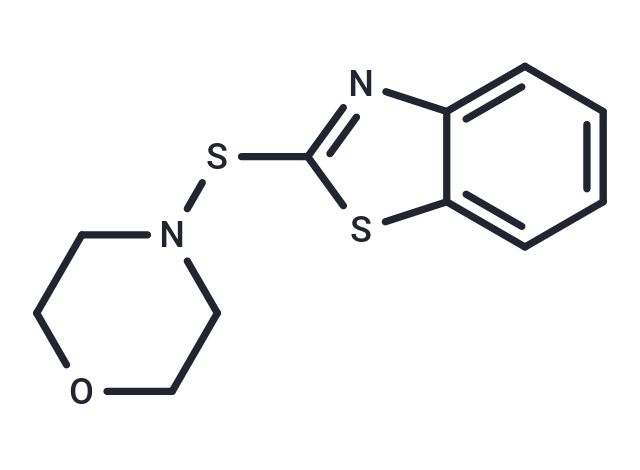


 嗨!有任何问题?点我咨询

 | 沪(静)应急管危经许[2024]203441