D-Mannopyranose exhibits diverse bioactivities across multiple assays. It inhibits Mannosidase in jack bean (Canavalia ensiformis) with an IC50 of approximately 20,000,000 nM and shows inhibition towards Human acrosin with 60.0% inhibition by aldohexoses and 48.0% by aldoses. It also displays inhibitory activity against mannan binding relative to Concanavalin A with an IC50 of 5,300,000 nM determined by a quartz crystal microbalance assay. The compound demonstrates anticryptosporidial activity against Cryptosporidium parvum GCH1 and Cryptosporidium hominis TU502, inhibiting hemagglutination of rabbit erythrocytes with MIC values of 50,000,000 nM and >100,000,000 nM, respectively. Additionally, it inhibits Cryptosporidium parvum Galactose/N-acetylgalactosamine-specific lectin binding to Caco2A cells with an IC50 >500,000,000 nM. It shows bioactivity in Drosophila melanogaster GM2b and LM408 with less than 10.0% inhibition at 5 mM concentrations. Binding affinity to Concanavalin A is indicated by an IC50 of 10,456,000 nM, with a competitive binding ratio to methyl alpha-D-mannoside of 0.13.
D-Mannopyranose also shows inhibitory effects on delayed death of the malarial parasite plastid at 18,526 nM, HP1-beta Chromodomain interactions at 100,000 nM, Polymerase Kappa at 13,371.4 nM, and ERG Ets/DNA interaction at 50,118.7 nM. It inhibits biotinylated-TM PAA from various human receptors and Escherichia coli FimH, showing over 90% inhibition after 3 hours. The compound has a Ki of 13,100,000 nM for [125I]-Man30-BSA displacement from the DC-SIGN receptor carbohydrate recognition domain and an IC50 of 560,000 nM for inhibiting E. coli FimH yeast agglutination.
Furthermore, D-Mannopyranose binds Burkholderia cenocepacia J2315 BC2L-A with a Kd of 5,150 nM, displacing N-(fluorescein-5-yl)-N'-(alpha-D-mannopyranosyloxyethyl)-thiocarbamide with an IC50 of 10,800 nM. Surface plasmon resonance assays show binding to Jack bean Concanavalin A with a Kd of 200,000 nM. It inhibits Pseudomonas aeruginosa PAO1 LecB with an IC50 of 149,000 nM and PA14 LecB with an IC50 of 52,000 nM based on fluorescence polarization assays. Lastly, it inhibits FIBCD1 V5-His tagged ecto-domain binding to acetylated BSA in ELISA with less than 50.0% inhibition at 50 mM..
Note: Summary generated by AI. Data source: ChEMBL 




 您的购物车当前为空
 很棒
很棒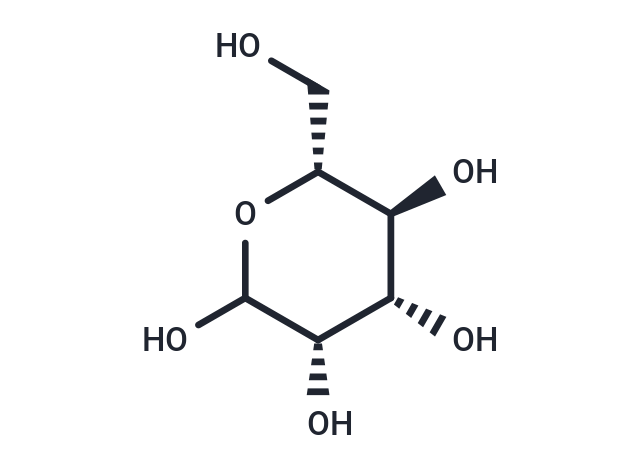


 嗨!有任何问题?点我咨询

 | 沪(静)应急管危经许[2024]203441