Piromidic acid is a versatile bioactive compound exhibiting cytotoxicity against human cancer cell lines and multiple other bioactivities. It has a Maximum Non-Toxic Concentration (MNTC) of 120.0 µM in HepG2 cells, 100.0 µM in HeLa cells, and 250.0 µM in CECH cells, with respective IC50 values of 110 µM, 97 µM, and 184 µM. It demonstrates inhibition of cell proliferation in various assays and has a cytotoxicity ratio of 1.67 for HepG2 cells.
In microbial assays, Piromidic acid shows an MIC of 38.0 µg/mL in Gyrase Induced DNA-Cleavage assays and IC50 greater than 100.0 µg/mL in a supercoiling inhibition assay for E. coli DNA gyrase. Its MIC values against bacteria are 50.0 µg/mL for E. coli (H560), 25.0 µg/mL for E. coli (vogel) and Klebsiella pneumonia (MGH-2), 12.5 µg/mL for Staphylococcus aureus (H228), and over 100.0 µg/mL for Pseudomonas aeruginosa (UI-18) and Streptococcus pneumoniae (SV-1).
The compound also displays 25.0% relaxation in isolated guinea pig trachea and a pD2 value of 5.3 for relaxation potency. In various enzymatic and cell-based assays, it demonstrates potencies ranging from 707.9 nM to over 25,000 nM, with notable activities including the inhibition of Lamin A splicing, Caspase-1, GCN5L2, APE1, and Ebola virus entry.
Piromidic acid inhibits sodium fluorescein uptake significantly in OATP1B1 and OATP1B3-transfected CHO cells, with an inhibition rate of 79.57% and 100.95% respectively at 10 µM, indicating strong OATP inhibitor potential. It has low inhibition of cell viability with an inhibition index of 0.06078.
In antiviral assays, the compound shows varied inhibition of SARS-CoV-2 induced cytotoxicity and 3CL-Pro protease, with some results indicating low or negligible effects at tested concentrations. However, it exhibits potential as a protease inhibitor with 8.107% inhibition of SARS-CoV-2 3CL-Pro at 20 µM and IC50 values greater than 20000.0 nM in certain assays.
Additionally, Piromidic acid has potential HDAC6 inhibitory activity with inhibition percentages of -15.55% in commercial peptide substrate assays and -8.29% in custom peptide substrate assays. It also shows antimalarial activity with IC50 values of 21.6 µg/mL in hepatic stage and 14.4 µg/mL and 41.4 µg/mL in blood stages for different strains of Plasmodium.
Overall, these results suggest Piromidic acid has a diverse range of bioactivities, making it a compound of interest for further research in oncology, antimicrobial, antiviral, and antimalarial fields, as well as in OATP and HDAC6 inhibition studies..
Note: Summary generated by AI. Data source: ChEMBL 




 您的购物车当前为空
 很棒
很棒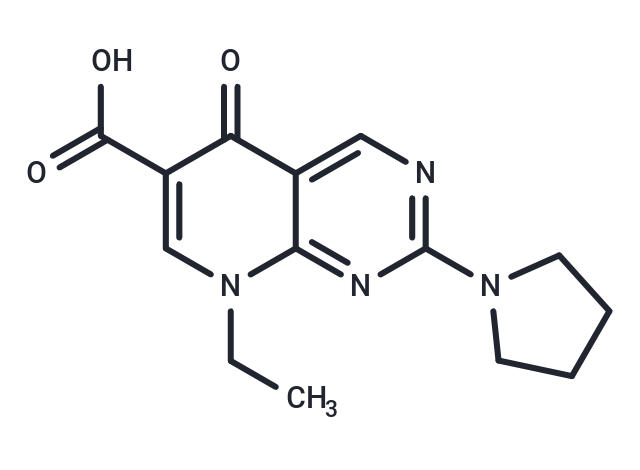

 嗨!有任何问题?点我咨询

 | 沪(静)应急管危经许[2024]203441