Tyrosinase-IN-16 exhibits a variety of bioactivities across multiple assays. It is an inhibitor of Plasmodium falciparum M18 Aspartyl Aminopeptidase (IC50=24123.0 nM), HSD17B4 (39810.7 nM), ROR gamma transcriptional activity (10000.0 nM), Aldehyde Dehydrogenase 1 (ALDH1A1, 17782.8 nM), Bacillus subtilis Sfp phosphopantetheinyl transferase (PPTase, 44668.4 nM), Cathepsin L proteinase (CTSL1, IC50 >59642.0 nM), Influenza NS1 Protein Function (1995.3 nM), 15-human lipoxygenase (12589.3 nM), phosphomannose isomerase (PMI, IC50=14492.0 nM and 6150.0 nM confirmed), 12-human lipoxygenase (14125.4 nM), Plasmodium falciparum M17-Family Leucine Aminopeptidase (M17LAP, IC50=2220.0 nM), HPGD (17782.8 nM), Hydroxyacyl-Coenzyme A Dehydrogenase, Type II (15848.9 nM), JMJD2A-Tudor Domain (19952.6 nM), T. brucei phosphofructokinase (30131.3 nM), Histone Lysine Methyltransferase G9a (1258.9 nM), 15-human lipoxygenase 2 (25118.9 nM), PLK1-PBD (13371.4 nM), and Trypanosoma Brucei (31622.8 nM). It activates mitochondrial fusion with a potency of 11220.2 nM and Methionine sulfoxide reductase A (MsrA) with an EC50 >103886.0 nM. Additionally, it has been identified as a novel general anesthetic and induces genotoxicity in human embryonic kidney cells. It also delays death in the malarial parasite plastid (10417.9 nM), inhibits phosphomannose isomerase in the development of antimalarial drugs targeting AMA1-RON (5972.8 nM), and was identified in various counterscreens and HTS assays, such as for C. difficile toxins (AC50=3540.0 nM and 18420.0 nM). Moreover, it inhibits the interaction between DCN1 and UBC12 (IC50=86.05 nM) and the substrate MIKLFSLKQQKKEEESAGGTK-biotin (IC50=126.99 nM) in assay-specific studies..
Note: Summary generated by AI. Data source: ChEMBL 




 您的购物车当前为空
 很棒
很棒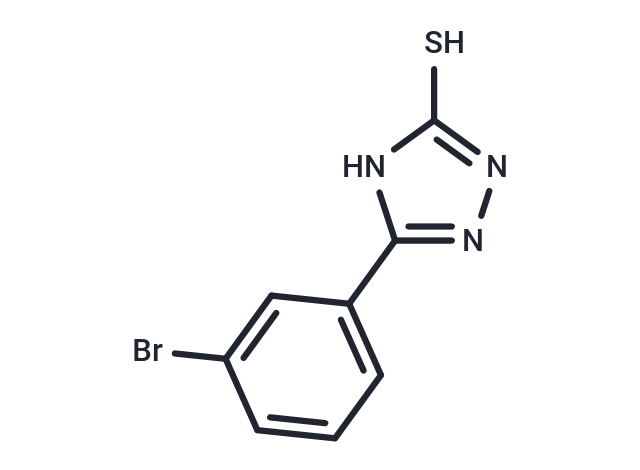


 嗨!有任何问题?点我咨询

 | 沪(静)应急管危经许[2024]203441