

购物车
 您的购物车当前为空

 很棒
很棒FGF-7/KGF Protein, Human, Recombinant (His) is expressed in E. coli expression system with His tag. The predicted molecular weight is 21 kDa and the accession number is P21781.
很棒别名 成纤维细胞生长因子, KGF, HBGF-7, fibroblast growth factor 7
FGF-7/KGF Protein, Human, Recombinant (His) is expressed in E. coli expression system with His tag. The predicted molecular weight is 21 kDa and the accession number is P21781.
| 规格 | 价格 | 库存 | 数量 |
|---|---|---|---|
| 5 μg | ¥ 396 | 3日内发货 | |
| 10 μg | ¥ 638 | 3日内发货 | |
| 20 μg | ¥ 1,050 | 现货 | |
| 50 μg | ¥ 1,870 | 5日内发货 | |
| 100 μg | ¥ 2,930 | 5日内发货 | |
| 200 μg | ¥ 5,220 | 5日内发货 |
| 产品描述 | FGF-7/KGF Protein, Human, Recombinant (His) is expressed in E. coli expression system with His tag. The predicted molecular weight is 21 kDa and the accession number is P21781. |
| 生物活性 | Measured in a cell proliferation assay using BaF3 mouse pro-B cells transfected with human FGFR2b. The ED50 for this effect is typically 3-20 ng/mL. 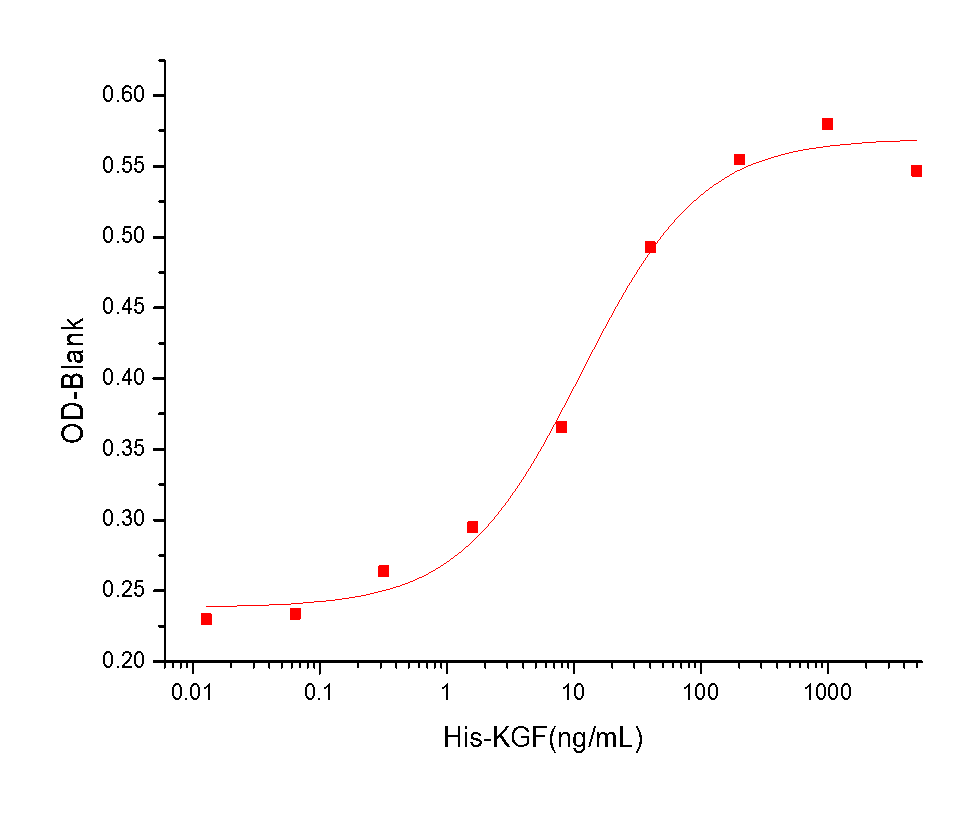 |
| 研究背景 | Fibroblast growth factor 7 (FGF7) is a member of the fibroblast growth factor (FGF) family of proteins. FGF7 plays an important role in regulating the proliferation, migration, and differentiation of cells. FGF7 is of stromal origin and produces a paracrine effect on epithelial cells. FGF7 is a mesenchyme-specific heparin-binding growth factor that binds FGF receptor 2 (FGFR2) to regulate numerous cellular and physiological processes. FGF7/FGFR2 promotes invasion and migration in human gastric cancer. FGF7 is specifically utilized as a paracrine factor during the process of differentiation of the epidermal layers in the regenerating scales and in particular for beta-cells differentiation. FGF7 over expression is associated with advanced clinical features in patients with upper tract and bladder urothelial carcinoma, justifying its potential prognostic value for urothelial carcinoma. |
| 种属 | Human |
| 表达系统 | E. coli |
| 标签 | N-His |
| 蛋白编号 | P21781 |
| 蛋白构建 | A DNA sequence encoding the human KGF (P21781) (Cys32-Thr194) was expressed with a polyhistidine tag at the N-terminus. Predicted N terminal: His |
| 蛋白纯度 | ≥ 95 % as determined by SDS-PAGE. ≥ 95 % as determined by SEC-HPLC. 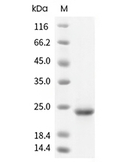 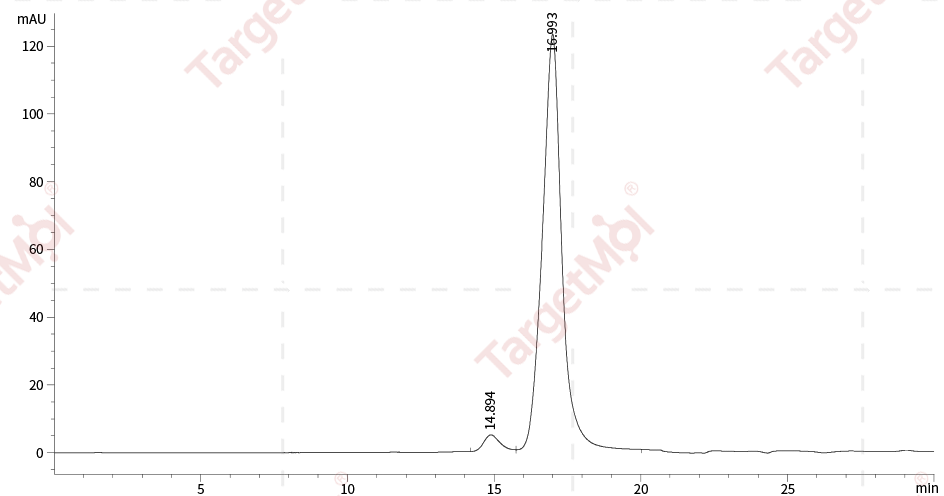 |
| 蛋白性状 | Lyophilized powder |
| 缓冲液 | Lyophilized from a solution filtered through a 0.22 μm filter, containing 50 mM Tris, 250 mM NaCl, pH 7.5. Typically, a mixture containing 5% to 8% trehalose, mannitol, and 0.01% Tween 80 is incorporated as a protective agent before lyophilization. |
| 复溶方法 | Reconstituted with sterile deionized water to 0.25 mg/mL. Reconstitution conditions may vary depending on the lot. |
| 别名 | 成纤维细胞生长因子, KGF, HBGF-7, fibroblast growth factor 7 |
| 内毒素 | < 0.01 EU/μg of the protein. |
| 分子量 | 21 kDa (predicted); 23 kDa (reducing conditions) |
| 运输方式 | In general, lyophilized powders are shipped with blue ice, while solutions are shipped with dry ice. |
| 存储 |
对于不同动物的给药剂量换算,您也可以参考 更多

 嗨!有任何问题?点我咨询

版权所有©2015-2026 TargetMol Chemicals Inc.保留所有权利.
沪ICP备20019793号-4 | 沪公网安备 31010602006700号 | 沪(静)应急管危经许[2024]203441