• TargetMol
    您的购物车当前为空

GRK2 Protein, Human, Recombinant (His & GST)

一键复制产品信息
GRK2 Protein, Human, Recombinant (His & GST)
产品编号 TMPY-04562

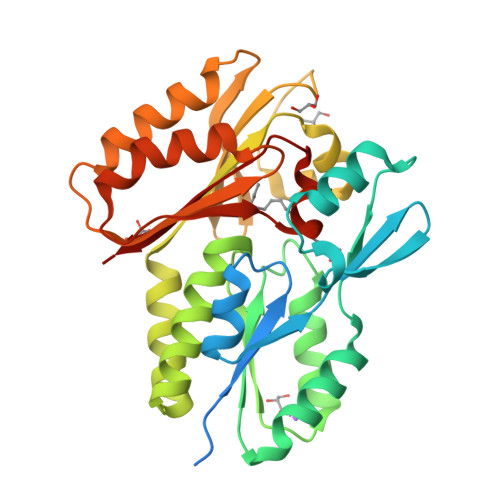
G-protein coupled receptor kinase 2 (GRK2), also referred as Adrenergic, beta, receptor kinase 1 (ADRBK1), is a ubiquitous member of the G protein-coupled receptor kinase (GRK) family that appears to play a central, integrative role in signal transduction cascades. GRK2 can phosphorylate a growing number of non-GPCR substrates and associate with a variety of proteins related to signal transduction, thus suggesting that this kinase could also have diverse 'effector' functions. GRK2 has been reported to interact with a variety of signal transduction proteins related to cell migration such as MEK, Akt, PI3Kgamma or GIT. Interestingly, the levels of expression and activity of this kinase are altered in a number of inflammatory disorders (as rheumatoid arthritis or multiple sclerosis), thus suggesting that GRK2 may play an important role in the onset or development of these pathologies. The important physiological function of GRK2 as a modulator of the efficacy of GPCR signal transduction systems is exemplified by its relevance in cardiovascular physiopathology as well as by its emerging role in the regulation of chemokine receptors. Besides its canonical role in the modulation of the signalling mediated by many G protein-coupled receptors (GPCR), this protein can display a very complex network of functional interactions with a variety of signal transduction partners, in a stimulus, cell type, or context-specific way.

GRK2 Protein, Human, Recombinant (His & GST)

GRK2 Protein, Human, Recombinant (His & GST)

一键复制产品信息
GRK2 Protein, Human, Recombinant (His & GST)
产品编号 TMPY-04562
G-protein coupled receptor kinase 2 (GRK2), also referred as Adrenergic, beta, receptor kinase 1 (ADRBK1), is a ubiquitous member of the G protein-coupled receptor kinase (GRK) family that appears to play a central, integrative role in signal transduction cascades. GRK2 can phosphorylate a growing number of non-GPCR substrates and associate with a variety of proteins related to signal transduction, thus suggesting that this kinase could also have diverse 'effector' functions. GRK2 has been reported to interact with a variety of signal transduction proteins related to cell migration such as MEK, Akt, PI3Kgamma or GIT. Interestingly, the levels of expression and activity of this kinase are altered in a number of inflammatory disorders (as rheumatoid arthritis or multiple sclerosis), thus suggesting that GRK2 may play an important role in the onset or development of these pathologies. The important physiological function of GRK2 as a modulator of the efficacy of GPCR signal transduction systems is exemplified by its relevance in cardiovascular physiopathology as well as by its emerging role in the regulation of chemokine receptors. Besides its canonical role in the modulation of the signalling mediated by many G protein-coupled receptors (GPCR), this protein can display a very complex network of functional interactions with a variety of signal transduction partners, in a stimulus, cell type, or context-specific way.
规格价格库存数量
5 μg
¥ 472
6-8日内发货
10 μg
¥ 772
6-8日内发货
20 μg
¥ 1,270
5日内发货
50 μg
¥ 2,930
5日内发货
大包装 & 定制
加入购物车
TargetMol 的所有产品仅用作科学研究或药证申报,不能被用于人体,我们不向个人提供产品和服务。请您遵守承诺用途,不得违反法律法规规定用于任何其他用途。
实验操作小课堂
常见问题解答
查看更多

产品信息

生物活性
No Kinase Activity
产品描述
G-protein coupled receptor kinase 2 (GRK2), also referred as Adrenergic, beta, receptor kinase 1 (ADRBK1), is a ubiquitous member of the G protein-coupled receptor kinase (GRK) family that appears to play a central, integrative role in signal transduction cascades. GRK2 can phosphorylate a growing number of non-GPCR substrates and associate with a variety of proteins related to signal transduction, thus suggesting that this kinase could also have diverse 'effector' functions. GRK2 has been reported to interact with a variety of signal transduction proteins related to cell migration such as MEK, Akt, PI3Kgamma or GIT. Interestingly, the levels of expression and activity of this kinase are altered in a number of inflammatory disorders (as rheumatoid arthritis or multiple sclerosis), thus suggesting that GRK2 may play an important role in the onset or development of these pathologies. The important physiological function of GRK2 as a modulator of the efficacy of GPCR signal transduction systems is exemplified by its relevance in cardiovascular physiopathology as well as by its emerging role in the regulation of chemokine receptors. Besides its canonical role in the modulation of the signalling mediated by many G protein-coupled receptors (GPCR), this protein can display a very complex network of functional interactions with a variety of signal transduction partners, in a stimulus, cell type, or context-specific way.
种属
Human
表达系统
Baculovirus Insect Cells
标签His, GST
蛋白编号P25098
别名
β,adrenergic, beta, receptor kinase 1
蛋白构建
A DNA sequence encoding the human ADRBK1 (NP_001610.2) (Met 1-Leu 689) was fused with the N-terminal polyhistidine-tagged GST tag at the N-terminus. Predicted N terminal: Met
蛋白纯度
> 90 % as determined by SDS-PAGE
分子量107 kDa (predicted); 110 kDa (reducing conditions)
内毒素< 1.0 EU/μg of the protein as determined by the LAL method.
蛋白性状Lyophilized powder
缓冲液Lyophilized from a solution filtered through a 0.22 μm filter, containing 50 mM Tris, 500 mM NaCl, 0.5 mM GSH, pH 8.0.Typically, a mixture containing 5% to 8% trehalose, mannitol, and 0.01% Tween 80 is incorporated as a protective agent before lyophilization.
复溶方法
A Certificate of Analysis (CoA) containing reconstitution instructions is included with the products. Please refer to the CoA for detailed information.
存储
It is recommended to store recombinant proteins at -20°C to -80°C for future use. Lyophilized powders can be stably stored for over 12 months, while liquid products can be stored for 6-12 months at -80°C. For reconstituted protein solutions, the solution can be stored at -20°C to -80°C for at least 3 months. Please avoid multiple freeze-thaw cycles and store products in aliquots.
运输方式In general, Lyophilized powders are shipping with blue ice.
研究背景
G-protein coupled receptor kinase 2 (GRK2), also referred as Adrenergic, beta, receptor kinase 1 (ADRBK1), is a ubiquitous member of the G protein-coupled receptor kinase (GRK) family that appears to play a central, integrative role in signal transduction cascades. GRK2 can phosphorylate a growing number of non-GPCR substrates and associate with a variety of proteins related to signal transduction, thus suggesting that this kinase could also have diverse 'effector' functions. GRK2 has been reported to interact with a variety of signal transduction proteins related to cell migration such as MEK, Akt, PI3Kgamma or GIT. Interestingly, the levels of expression and activity of this kinase are altered in a number of inflammatory disorders (as rheumatoid arthritis or multiple sclerosis), thus suggesting that GRK2 may play an important role in the onset or development of these pathologies. The important physiological function of GRK2 as a modulator of the efficacy of GPCR signal transduction systems is exemplified by its relevance in cardiovascular physiopathology as well as by its emerging role in the regulation of chemokine receptors. Besides its canonical role in the modulation of the signalling mediated by many G protein-coupled receptors (GPCR), this protein can display a very complex network of functional interactions with a variety of signal transduction partners, in a stimulus, cell type, or context-specific way.

计算器

  • 复溶 计算器
  • 重组蛋白稀释 计算器
  • 比活力 计算器

技术支持

请阅读 重组蛋白用户指南 了解更多具体信息.